

The Arcade Racer That Defined Sega's Need for Speed
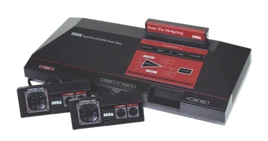
Few racing games can claim the historical significance of Hang On (Europe). Originally born in arcades before arriving on Sega's Master System Mark III, Hang-On represented a technological leap forward for motorcycle racing games and helped establish Sega as one of the industry's most innovative developers. Released for the Master System during the mid-1980s, this home adaptation brought the thrill of high-speed superbike competition into living rooms across Europe, introducing players to a racing experience unlike anything available on competing consoles.
While modern racing simulations focus on realism and licensed vehicles, Hang-On succeeded through pure adrenaline. Its combination of speed, responsive controls, and instantly recognizable arcade heritage made it one of the most influential racers of its generation and a cornerstone of Sega's early success.
The Legacy of Hang On (Europe) and Sega's Arcade Revolution
The story of Hang-On begins in 1985, when legendary Sega designer Yu Suzuki introduced the arcade version to the world. At the time, racing games were relatively simple affairs, often relying on top-down perspectives or limited movement. Hang-On changed everything.
The arcade cabinet featured a full motorcycle body that players physically leaned to steer, creating one of the most immersive gaming experiences ever seen. The game quickly became a global sensation and helped establish Sega's reputation for groundbreaking arcade technology.
The Master System adaptation sought to recreate that excitement on 8-bit hardware. While naturally limited compared to the original arcade machine, it retained the core elements that made Hang-On special: speed, precision, and the constant pressure of racing against time.
A Showcase Title for the Master System
In Europe especially, Hang-On became closely associated with Sega's console. Many Master System owners first experienced the game through bundle cartridges, making it one of the defining titles of the platform's early years.
For countless players, it served as a demonstration of what Sega hardware could accomplish when developers prioritized fast gameplay and technical innovation.
Racing Against Time: The Gameplay of Hang-On
At its core, Hang-On is deceptively simple. Players ride a high-performance motorcycle through a series of checkpoint-based courses, attempting to reach each checkpoint before the countdown timer expires.
However, the simplicity of the objective masks a surprisingly demanding challenge.
Mastering the Road
The game's roads twist, curve, and narrow as players progress through increasingly difficult stages. Maintaining maximum speed while avoiding crashes becomes a delicate balancing act.
- Tight corners require precise steering.
- Traffic creates constant hazards.
- Checkpoint timers encourage aggressive riding.
- Higher speeds reduce reaction time.
- Course memorization improves long-term success.
Unlike many racing games that focus on direct competition against opponents, Hang-On emphasizes survival and efficiency. The true enemy is the clock.
The Thrill of Speed
One of the game's greatest achievements is how convincingly it communicates velocity. As scenery rushes past and the road stretches into the distance, players experience a sense of momentum rarely seen on 8-bit hardware.
Even today, the sensation remains remarkably effective.
Pushing the Master System Hardware to Its Limits
Creating a fast pseudo-3D racing game on the Master System was an enormous technical challenge. The console's Z80 processor and limited memory resources required clever programming techniques to achieve the illusion of speed.
Visual Engineering and Road Scaling
Hang-On uses sprite scaling and road-rendering tricks to simulate depth and distance. The road appears to rush toward the player while environmental objects create a convincing impression of movement.
Although occasional sprite flickering can occur during busy scenes, the overall effect remains impressive considering the hardware constraints.
The visual presentation helped establish Sega's reputation for delivering arcade-style experiences at home.
Sound Design and Racing Atmosphere
The Master System's PSG sound chip may have lacked the sophistication of later consoles, but Hang-On still delivered energetic audio that complemented the action.
Engine sounds, checkpoint notifications, and music cues worked together to maintain tension throughout each race.
The result was an experience that felt surprisingly authentic despite the platform's technical limitations.
Precision Controls
The Master System controller proved particularly well suited to Hang-On's design. Responsive directional inputs allowed players to make quick corrections while navigating challenging corners.
The game's minimal perceived input lag remains one of the reasons it continues to feel enjoyable decades later.
Playing Hang-On Today Through Emulation
Modern emulation has become one of the best ways to preserve and enjoy Hang-On. Whether on a desktop PC or portable handheld, the game remains highly accessible.
Recommended Emulator Settings
For the most accurate Master System experience, players should consider the following configuration:
- Enable cycle-accurate emulation.
- Use low-latency input settings.
- Disable excessive frame buffer options.
- Enable save states for practice runs.
- Use integer scaling for sharp visuals.
These settings preserve the game's responsiveness while maintaining visual authenticity.
4K Upscaling and Modern Displays
Hang-On benefits significantly from modern scaling techniques. On a 4K display, the game's road graphics and environmental details appear cleaner and more defined than ever.
Many enthusiasts pair integer scaling with CRT shaders to recreate the appearance of vintage televisions. The result captures the nostalgic charm of the original hardware while eliminating the blur often associated with older displays.
Unlike modern racing games that rely on HD texture packs and advanced lighting systems, Hang-On's appeal comes from elegant design and efficient use of pixel art.
Steam Deck and Odin Performance
The Steam Deck and Odin handhelds are excellent platforms for Master System emulation. Because Hang-On requires minimal processing power, players can expect:
- Full-speed emulation.
- Near-instant loading times.
- Long battery life.
- Stable frame pacing.
- Reliable save-state support.
The game's quick races make it particularly enjoyable during short portable gaming sessions.
The Lasting Influence of a Racing Pioneer
Hang-On's influence extends far beyond the Master System. The original arcade game spawned sequels, inspired future Sega racers, and helped establish many of the design principles that would later appear in titles such as Super Hang-On and other high-speed motorcycle games.
Yu Suzuki's innovations in arcade design would eventually lead to groundbreaking projects including Out Run, After Burner, Virtua Racing, and Shenmue.
Today, speedrunning communities continue competing for optimal completion times, while preservationists work to document the various regional releases of the game. For many retro enthusiasts, Hang-On remains one of the purest examples of Sega's arcade philosophy: simple concepts executed with exceptional craftsmanship.
Frequently Asked Questions About Hang On (Europe)
What makes Hang On (Europe) different from the arcade version?
The Master System version recreates the core gameplay and checkpoint racing structure while adapting visuals and performance to fit 8-bit hardware limitations.
How do I fix graphical glitches in Hang On (Europe)?
Use an updated emulator with accurate Master System compatibility settings. Most graphical issues result from incorrect rendering configurations or outdated emulator cores.
What is the best version of Hang On to play today?
Both the original arcade release and the Master System version are worth experiencing. The arcade game offers greater visual spectacle, while the Master System release remains an impressive technical achievement in its own right.
Does Hang On benefit from modern emulation features?
Yes. Save states, rewind functions, reduced input lag, CRT shaders, and 4K upscaling all enhance accessibility while preserving the original gameplay experience.
Nearly four decades after its release, Hang-On remains a landmark racing game that perfectly captures Sega's pioneering arcade spirit. Fast, challenging, and endlessly replayable, it continues to earn its place among the most important titles in Master System history.


